

Always tired, low on energy, foggy-headed... could you be missing a nutrient?
When tiredness isn't only about too little sleep.
Sound familiar? You wake up still tired even after a full eight hours. By the afternoon you're running out of steam and can't focus, and a few flights of stairs leave you more out of breath than usual.
Many people put it down to hard work, too little rest or built-up stress. But tiredness can sometimes be linked to not getting enough iron, a nutritional gap that is easy to overlook.
Why does the body need iron?
Picture your body as a big city, with trillions of cells working around the clock. Every one of them needs oxygen to keep producing energy as normal.
Iron is a key part of hemoglobin in red blood cells, which carries oxygen from the lungs to the rest of the body.
Iron also plays a role in how cells produce energy.
When the body is short of iron over a long period, red blood cell production can be affected, which may lead to iron-deficiency anemia, with signs such as tiring easily, weakness or not having the energy for everyday activities.
Check yourself: which signs shouldn't you ignore?
- Tiring easily, feeling drained
- Trouble concentrating or thinking clearly
- Feeling more tired than usual after activity
- Getting out of breath easily on exertion
These signs can appear with iron-deficiency anemia, but they are not specific to it. If they persist, see a doctor to find out the cause.
Interestingly, some people's iron stores can drop even while their hemoglobin is still in the normal range. So there's no need to wait for anemia before paying attention to iron.
Research: iron may be linked to tiredness, even without anemia
A study by Kapoor and colleagues (2023) followed 93 male athletes without anemia, comparing 3.6 mg of iron a day with a placebo over 4 weeks.
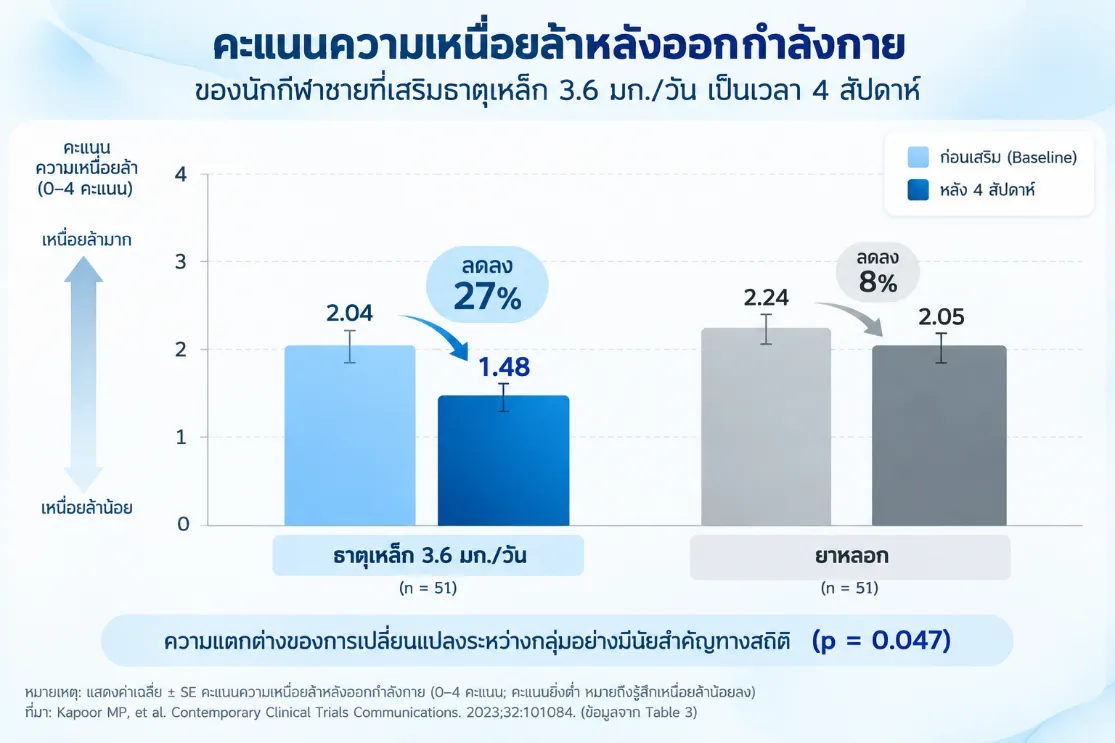
Athletes who took 3.6 mg of iron a day for 4 weeks saw their post-exercise fatigue scores fall by 27%, a statistically significant difference from the placebo group (p = 0.047).
Iron doesn't work alone
Iron is important for making red blood cells, but several other vitamins and nutrients also help support the body's normal function.
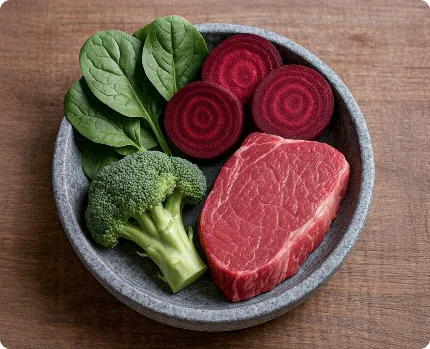
Iron: a key helper for the blood. It is part of hemoglobin, which carries oxygen around the body.
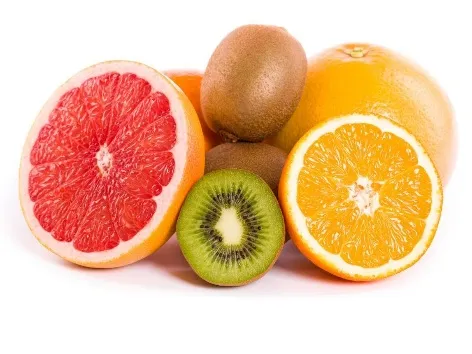
Vitamin C: helps the body absorb iron from food, especially the iron found in plants.
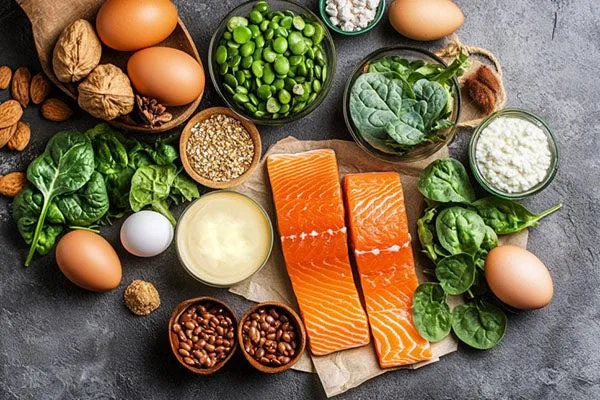
Vitamins B6, B12 and folate: important nutrients involved in making hemoglobin and in the normal development of red blood cells.
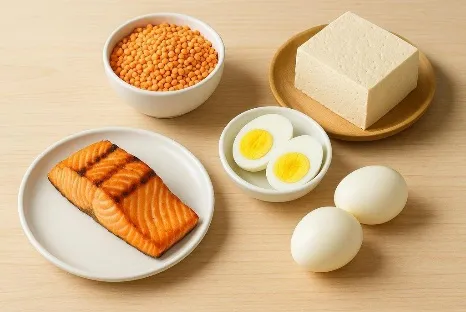
Amino acids: the basic building blocks of protein, which the body needs to build and repair tissue, including the proteins in red blood cells.
Don't wait for your body to send signals before thinking about nutrients
Tiredness can come from many things, including rest, stress and some health issues. Getting enough nutrients is one more foundation of looking after yourself.
That includes iron, which plays a role in making red blood cells, along with vitamin C, vitamin B6, vitamin B12, folate and amino acids, each with an important job in how the body works.
Eating a varied diet is a good place to start. For people whose meals aren't always balanced, a supplement combining several vitamins, minerals and amino acids may be another option to help fill the gaps left by daily food.
Good health starts with paying steady attention to the small nutrients your body needs.
- Vaucher, P., Druais, P.-L., Waldvogel, S., & Favrat, B. (2012). Effect of iron supplementation on fatigue in nonanemic menstruating women with low ferritin: A randomized controlled trial. CMAJ, 184(11), 1247–1254. ↗
- National Institutes of Health, Office of Dietary Supplements. (n.d.). Iron: Fact sheet for consumers. ↗
- National Institutes of Health, Office of Dietary Supplements. (n.d.). Iron: Fact sheet for health professionals. ↗
- Kapoor, M. P., Sugita, M., Kawaguchi, M., Timm, D., Kawamura, A., Abe, A., & Okubo, T. (2023). Influence of iron supplementation on fatigue, mood states and sweating profiles of healthy non-anemic athletes during a training exercise: A double-blind, randomized, placebo-controlled, parallel-group study. Contemporary Clinical Trials Communications, 32, Article 101084. ↗

We use cookies to improve performance and give you a better experience on this website. If you accept, we can show you content that better matches your interests. You can change your consent at any time via “Cookie settings”. Cookie policy