

Magnesium
Magnesium is a bulk mineral, chemical symbol Mg, and the second most abundant positively charged ion inside human cells. It never occurs as the free metal in nature, always as a salt or a complex, which is why supplement labels always name a form alongside it — oxide, citrate, bisglycinate and so on.
Magnesium is an essential mineral, and one the body needs in relatively large amounts. Nutrition references describe magnesium as a cofactor for several hundred enzyme systems in the body, and it is also a structural component of bone — roughly half the body's magnesium sits there. These are descriptions of the mineral itself, not statements about what a product does.
About this ingredient
Magnesium is a mineral, and in plants it sits at the centre of chlorophyll, which is why dark leafy greens are a good source. An adult body contains around 25 g of magnesium in total, of which roughly 50 % to 60 % is in bone and most of the rest in soft tissue. Only a very small fraction circulates in blood, which is why a blood magnesium test reflects the body's total stores poorly. Raw material for supplements is made by combining magnesium from mineral deposits or seawater with an organic acid or an amino acid, producing the various forms that appear on labels.
Dietary sources
Magnesium is present in a wide range of foods. The most concentrated sources are seeds and nuts — one ounce of pumpkin seeds supplies about 156 mg — followed by dark leafy greens, beans, whole grains and dark chocolate. The US Recommended Dietary Allowance is 400 to 420 mg a day for men and 310 to 320 mg for women, counting food and supplements together. Two points are worth knowing. Phytic acid in whole grains and legumes binds magnesium and reduces its absorption, though soaking, sprouting and fermenting lower the phytate content. And refining grain removes a high proportion of the magnesium, so foods made from white flour contain markedly less than whole-grain equivalents.
Forms & absorption
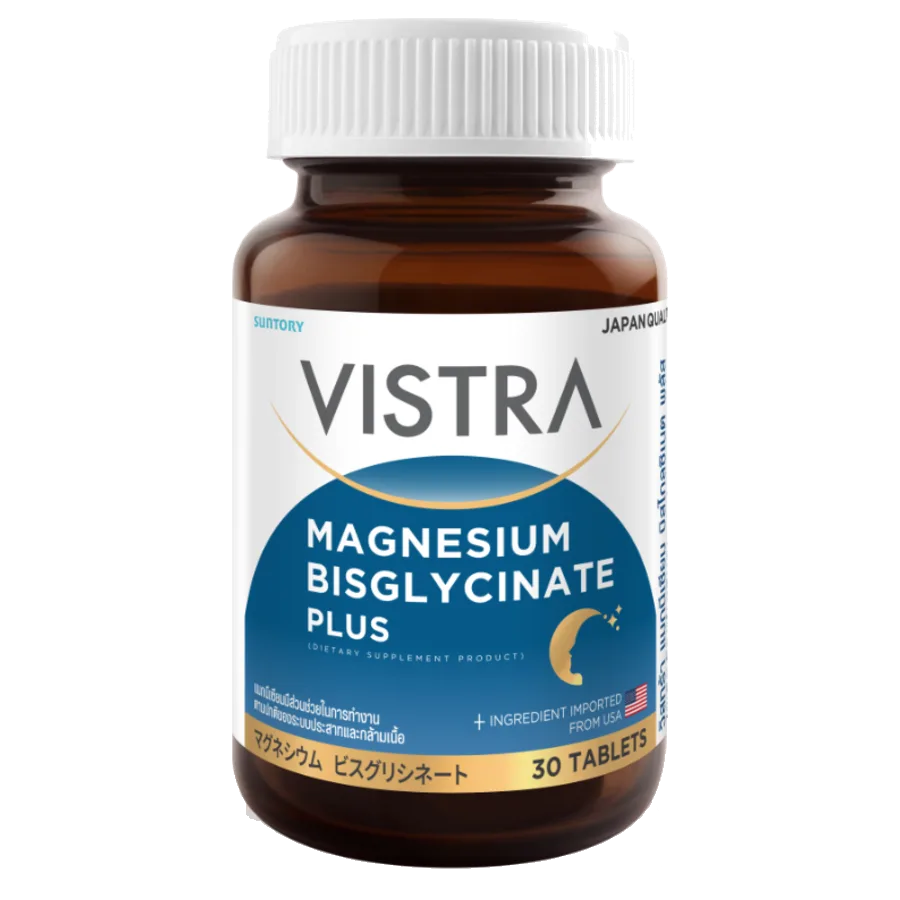
Magnesium forms differ in two ways: how much elemental magnesium they contain, and how well the gut tolerates them. Magnesium oxide is about 60 % elemental magnesium by weight, the highest of the common forms, but it dissolves poorly and is poorly absorbed. Magnesium citrate is about 16 % elemental magnesium, and magnesium bisglycinate — magnesium chelated to two molecules of the amino acid glycine — about 18 %. Those figures explain why a 500 mg tablet of each delivers a completely different amount of magnesium. Products come as tablets, capsules and drink powders, and because absorption does not depend on fat, they can be taken with or without food.
Research status
There is a large body of human research on magnesium across many populations, but it runs into a methodological limitation that is raised repeatedly: there is still no good indicator of magnesium status, because so little of the body's magnesium circulates in blood, which makes it hard to recruit participants who are genuinely low. Trials have also used different salts, which deliver different amounts of elemental magnesium and are absorbed differently, so results should be compared across studies with care. A published perspective has called for the Tolerable Upper Intake Level for supplemental magnesium to be re-evaluated, which shows the question is still under discussion.
Safety & considerations
The US Food and Nutrition Board set a Tolerable Upper Intake Level for magnesium of 350 mg a day for everyone aged 9 and over. The important detail is that this figure applies only to magnesium from supplements and medicines, not to magnesium from food — which is unlike almost every other nutrient. The reason is that the level was set on the basis of osmotic diarrhoea from high doses of magnesium salts, not systemic toxicity. The commonly reported effects are diarrhoea, nausea and abdominal cramping. NIH ODS lists magnesium oxide among the forms most likely to cause diarrhoea; the mechanism is that the unabsorbed portion draws water into the bowel. For Thailand, the Thai FDA guidance of 8 July 2024 gives a figure of not more than 350 mg of total magnesium per day at item 185, as a condition attached to red marine algae as a raw material. Because magnesium is cleared by the kidneys, anyone with reduced kidney function should ask a doctor first. Several medicine groups also interact with magnesium, among them proton pump inhibitors, diuretics and certain antibiotics. If you take these, or are pregnant or breastfeeding, speak to a doctor or pharmacist before starting, and always follow the amount printed on the label. Dietary supplements are not intended to prevent, treat or cure any disease.
Quality markers
Four things are worth checking on a magnesium label, and the first matters far more than the rest: whether the label states elemental magnesium or the weight of the compound. The figure 500 mg on a bottle of magnesium bisglycinate is the weight of the compound and delivers roughly 90 mg of elemental magnesium, whereas 500 mg of magnesium oxide delivers roughly 300 mg. The two numbers cannot be compared directly. Second, the form should be named in full — oxide, citrate, bisglycinate — rather than just 'magnesium'. Third, how many tablets make up a serving, since the figure on the front of the pack is usually per serving rather than per tablet. Fourth, what else comes with it: vitamin B6 or zinc in the same formula counts towards whatever else you are taking. Every dietary supplement sold in Thailand also carries an FDA (อย.) registration number on the label.
- NIH Office of Dietary Supplements – Magnesium Fact Sheet for Health Professionals ↗
- Advances in Nutrition (PMC) – Call for re-evaluation of the Tolerable Upper Intake Level for magnesium supplementation in adults ↗
- Thai FDA – Advice on the use of key ingredients in dietary supplements (8 July 2024), item 185 Red marine algae ↗
This page is general educational information about a nutrient — it describes the nutrient itself and is not a statement about any particular product. Dietary supplements are food, not medicine, and have no effect in preventing or treating disease. The references listed above are public-institution sources, not product claims.

We use cookies to improve performance and give you a better experience on this website. If you accept, we can show you content that better matches your interests. You can change your consent at any time via “Cookie settings”. Cookie policy