

Coenzyme Q10 (CoQ10)
Coenzyme Q10 is a fat-soluble compound found in almost every cell in the body, and in the largest amounts in the part of the cell that produces energy. The body makes its own, so it is not classed as a vitamin, and supplements supply it in one of two forms: ubiquinone or ubiquinol.
Coenzyme Q10 is described in the literature both as a coenzyme involved in the body's normal energy-producing processes and as a fat-soluble antioxidant. It is often discussed together with vitamin E, because the two are studied alongside each other in laboratory work, and references generally note that the amount the body makes declines with age. These are descriptions of the nutrient itself, not statements about what a product does.
About this ingredient
Coenzyme Q10 belongs to a group of compounds called ubiquinones. The name comes from ubiquitous — these compounds occur in nearly all living organisms. Coenzyme Q10 is fat-soluble, and because all animals, humans included, make their own, it does not meet the definition of a vitamin. Within the cell it is most concentrated in the part responsible for producing energy.
Dietary sources
Coenzyme Q10 is not an essential nutrient; the body makes its own. There is no Thai RDI for it, no EU nutrient reference value, and most food composition tables do not list it separately. In an ordinary diet it is most abundant in fish, chicken, pork, beef and other muscle meats, in liver and other organ meats, and in some bee pollens. Amounts vary with the species and the cut, and cooking with heat can reduce how much coenzyme Q10 is left in the food. Plant foods contain distinctly less than animal foods. Most commercial raw material for supplements is produced by yeast or bacterial fermentation rather than extracted from animal tissue.
Forms & absorption
Coenzyme Q10 raw materials differ in which of the two forms is used and in how the product is made. Ubiquinone is the long-established form, an orange powder. Ubiquinol is more sensitive to air and therefore needs air-excluding packaging. In the body the two convert back and forth continuously, and studies that measure blood levels report very large differences between individuals whichever form is given. The molecule is fat-soluble and large, so absorption is inherently low; most products are therefore softgels in an oil base and are meant to be taken with a meal containing fat. Thai FDA guidance on key ingredients in dietary supplements lists coenzyme Q10 (ubidecarenone) and ubiquinol as a single entry, item 356, and counts them together.
Research status
Human research on coenzyme Q10 has accumulated since the 1980s across a wide dose range, from around 30 mg to several hundred milligrams a day, but many of the studies are small and use different raw materials. A point raised repeatedly in the literature is how much plasma levels vary between individuals, which makes results hard to compare across studies. No health claim for coenzyme Q10 is authorised in the European Union, and none has been approved by the Thai FDA for the products on this site. This page therefore presents coenzyme Q10 here as an ingredient, not as a benefit. If you read a specific study, it is worth checking how many people took part, how long it ran, which form was used and who funded it.
Safety & considerations
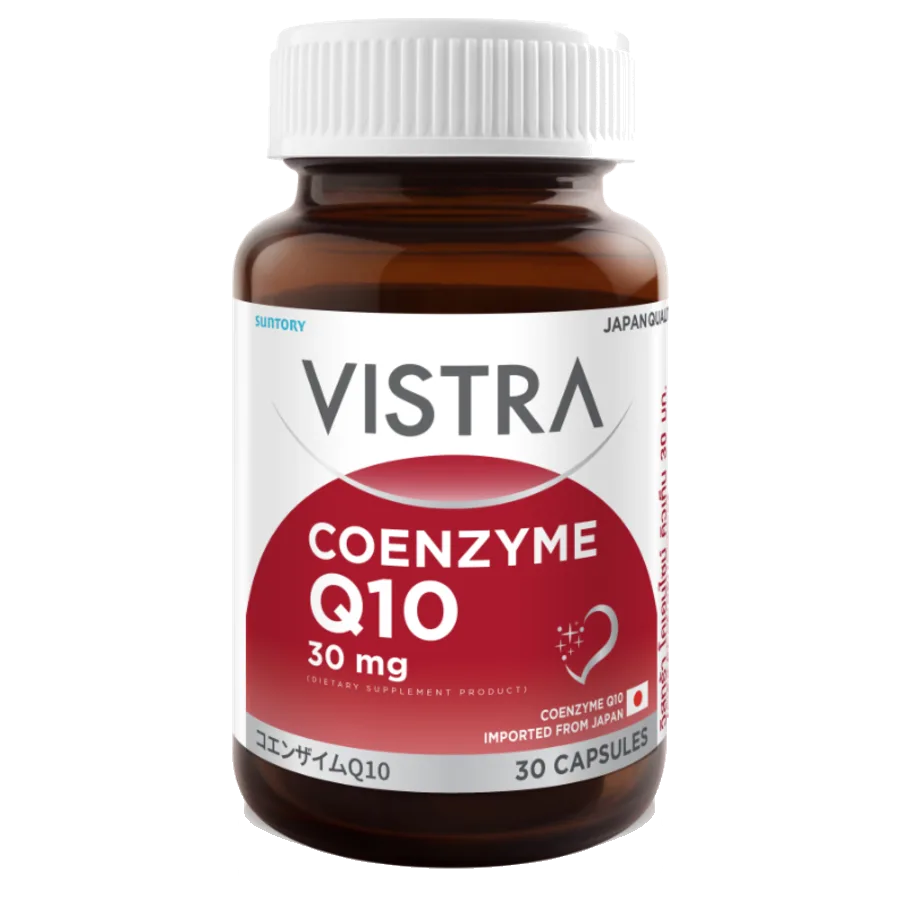
Thai FDA guidance on the use of key ingredients in dietary supplements, dated 8 July 2024, lists coenzyme Q10 as item 356 at not more than 30 mg per day, counting coenzyme Q10 and ubiquinol together. That figure is well below the amounts used in much of the published research, and because it is a combined ceiling it is worth checking any other product you take. Interactions with prescription medicines are discussed in the published literature, and reviews such as the Linus Pauling Institute's cover them. This page cannot give individual advice on taking a supplement alongside a medicine: anyone on prescription medication should ask the doctor managing their treatment before starting coenzyme Q10 and follow that advice. If you are pregnant or breastfeeding or take prescription medicines, speak to a doctor or pharmacist before starting any supplement, and always follow the amount printed on the label. Dietary supplements are not intended to prevent, treat or cure any disease.
Quality markers
Five things are worth checking on a coenzyme Q10 label. First, the form: it should say ubiquinone or ubiquinol, since both count against the same Thai FDA ceiling. Second, whether the milligram figure refers to coenzyme Q10 itself rather than the total weight of the capsule contents. Third, the delivery system — a softgel in oil behaves differently from a powder in a hard capsule. Fourth, the packaging: ubiquinol is oxygen-sensitive, so air-excluding blisters or opaque bottles hold their content better, and the product should be kept away from sunlight and heat. Fifth, the directions, which should say to take it with a meal containing fat. Every dietary supplement sold in Thailand also carries an FDA (อย.) registration number on the label, which can be checked against the Thai FDA public register.
- Linus Pauling Institute (Oregon State University) – Coenzyme Q10 ↗
- PubChem (NCBI) – Ubidecarenone (coenzyme Q10) compound summary ↗
- Thai FDA – Advice on the use of key ingredients in dietary supplements (8 July 2024), item 356 Coenzyme Q10 ↗
This page is general educational information about a nutrient — it describes the nutrient itself and is not a statement about any particular product. Dietary supplements are food, not medicine, and have no effect in preventing or treating disease. The references listed above are public-institution sources, not product claims.

We use cookies to improve performance and give you a better experience on this website. If you accept, we can show you content that better matches your interests. You can change your consent at any time via “Cookie settings”. Cookie policy