

UC-II®
UC-II is undenatured type II collagen, extracted from chicken sternal cartilage by a low-temperature process that keeps the collagen in its original, undamaged state. It is not the same ingredient as ordinary collagen peptides, which are type I collagen broken down into short fragments, and it is used at a completely different scale of dose.
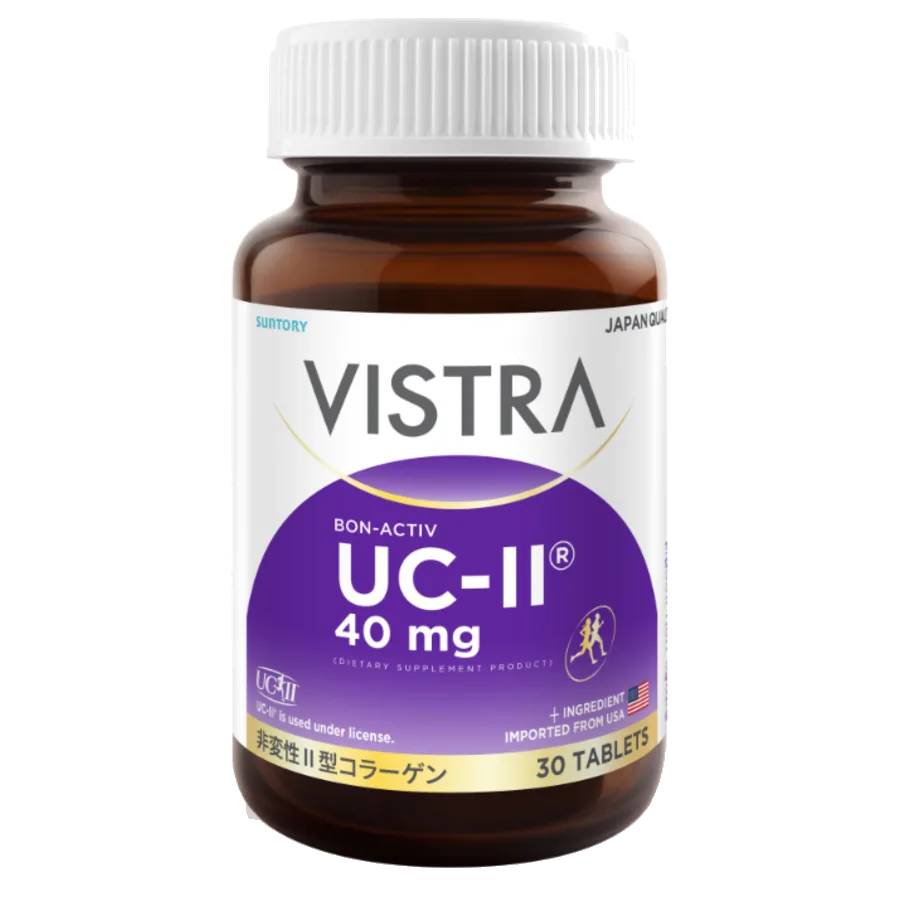
UC-II is undenatured type II collagen, and two things define it. The first is the collagen type: type II is the collagen found mainly in cartilage, as distinct from type I, which is found mainly in skin and bone. The second is the state of the raw material: undenatured means it has not been broken down by heat or by digestion. The literature describes that intact state as the reason UC-II is used at milligram rather than gram doses. This page describes the ingredient itself and is not a statement about any particular product. Dietary supplements are not intended to prevent, treat or cure any disease.
About this ingredient
Human collagen comes in several types, each found in different tissues. Type II is the main structural protein of cartilage, while type I is the type that predominates in skin and bone. 'Undenatured' describes the process rather than the chemistry: it means the raw material has not been through high heat or digestion, so the collagen stays in the state it has in cartilage.
Dietary sources
UC-II is not an essential nutrient, so there is no Thai RDI, no EU nutrient reference value, and no entry in food composition tables. In an ordinary diet, type II collagen comes from the cartilaginous parts of animals — chicken cartilage, the ends of pork ribs, joint tendons. The point worth making is that virtually all type II collagen in food has been through cooking heat and is therefore denatured, so it is not in the same state as the raw material used in supplements. Plant foods contain no collagen of any type. Commercial raw material is produced from chicken sternal cartilage using a patented low-temperature process.
Forms & absorption
The distinction that matters here is between UC-II and ordinary collagen peptides. Both come from collagen, and they differ in almost every other respect. Collagen peptides are type I, broken down into short fragments, and used at gram-scale doses. UC-II is type II, kept in its original state, and used at milligram scale: the published research used 40 mg a day of raw material, which provided 10.4 ± 1.3 mg of native type II collagen. Those two figures are not the same number and should not be confused. Because the properties of the raw material depend on that state being preserved, heat during manufacturing and storage matters. Most products are capsules or tablets.
Research status
The human research base for UC-II is much smaller than for the other ingredients on these pages. The study cited most often is a randomised, double-blind, placebo-controlled trial published in 2013 in 55 healthy subjects, randomised to placebo (n = 28) or to 40 mg a day of the raw material (n = 27) for 120 days. Two limitations are worth knowing. The participant count is very small by the standards of nutrition trials. And some of the authors were affiliated with the company that manufactures the raw material, a fact disclosed in the publication and worth weighing. No claim has been approved by the Thai FDA for the products on this site. This page therefore presents UC-II here as an ingredient, not as a benefit.
Safety & considerations
Thai FDA guidance on the use of key ingredients in dietary supplements, dated 8 July 2024, lists collagen type II, and its hydrolysed and undenatured forms, as item 344, naming chicken sternum as the source and setting a maximum of 1 g per day. That is a separate entry and a separate ceiling from ordinary collagen at item 342, which is capped at 10 g per day. Typical product doses are at the milligram scale and therefore far below this ceiling. Anyone with a chicken or egg allergy should read the source declaration on the label, since the raw material comes from chicken sternal cartilage. If you are pregnant or breastfeeding, take prescription medicines, or have a condition affecting the immune system, speak to a doctor or pharmacist before starting any supplement, and always follow the amount printed on the label. Dietary supplements are not intended to prevent, treat or cure any disease.
Quality markers
Four things are worth checking on a label containing type II collagen. First and most important, whether the label states the weight of the raw material or the amount of undenatured type II collagen within it: 40 mg of raw material provides about 10 mg of undenatured type II collagen, a difference of roughly fourfold, and the two cannot be compared directly. Second, the word 'undenatured' should appear, because hydrolysed type II collagen is a different raw material. Third, the source should be declared as chicken sternal cartilage so that anyone with a food allergy can check it. Fourth, storage away from heat, since the properties of this raw material depend on the structure staying intact. Every dietary supplement sold in Thailand also carries an FDA (อย.) registration number on the label.
- placebo-controlled study of undenatured type II collagen in healthy volunteers ↗
- Thai FDA – Advice on the use of key ingredients in dietary supplements (8 July 2024), item 344 Collagen type II ↗
This page is general educational information about a nutrient — it describes the nutrient itself and is not a statement about any particular product. Dietary supplements are food, not medicine, and have no effect in preventing or treating disease. The references listed above are public-institution sources, not product claims.

We use cookies to improve performance and give you a better experience on this website. If you accept, we can show you content that better matches your interests. You can change your consent at any time via “Cookie settings”. Cookie policy